


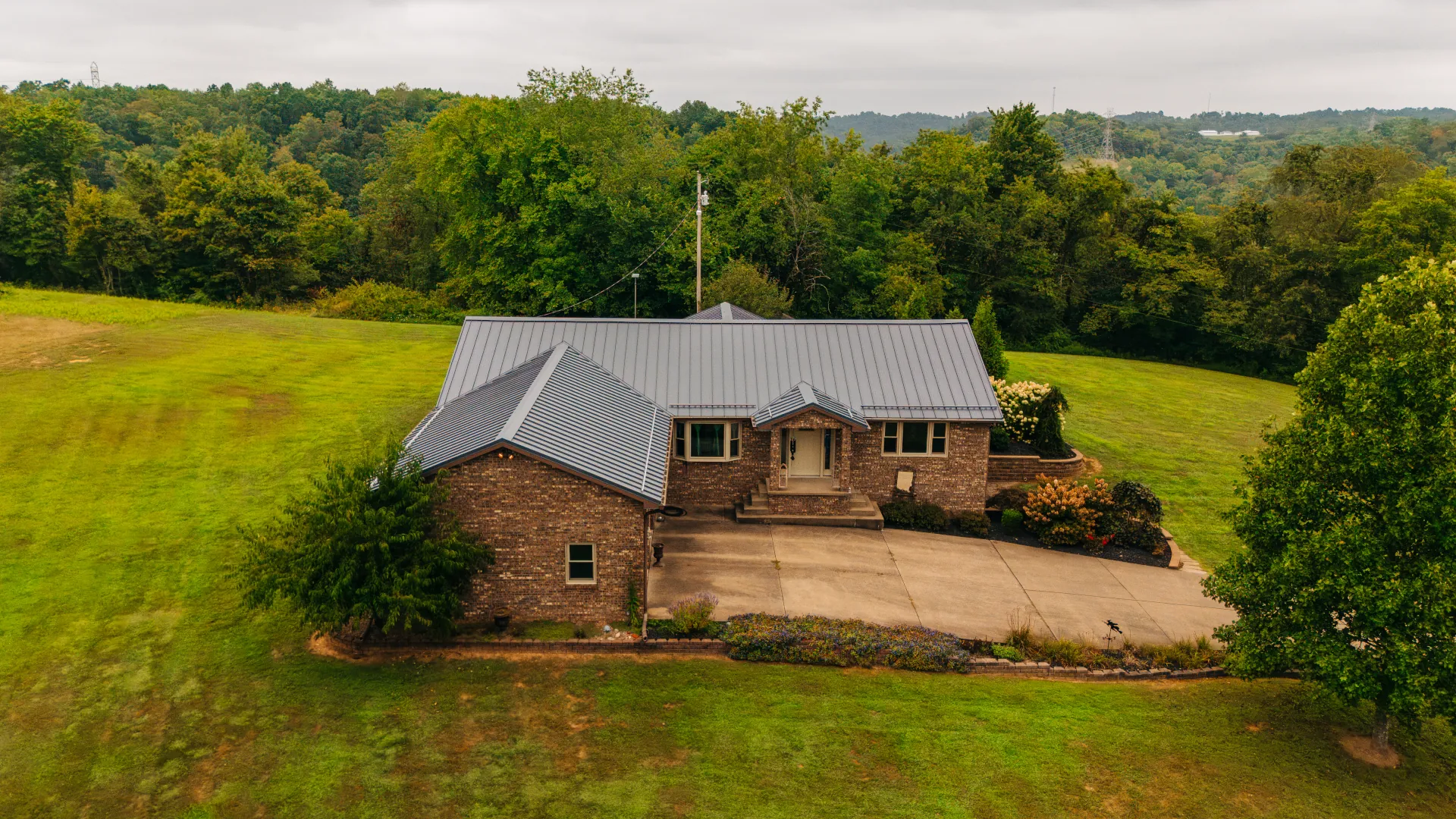
Have questions about metal roofing or exterior metalwork? Find straightforward answers about standing seam and exposed fastener roofing, gutters and leaf guards, snow guards, installation, maintenance, and more. Explore the topics below to learn what to expect and find the right solution for your home or property.
A properly installed metal roof can last for decades. Its lifespan depends on the roofing system, materials, installation quality, and regular maintenance.
Not necessarily. Roof decking, underlayment, insulation, and attic space help reduce the sound of rain, making a properly installed metal roof comparable to other roofing systems.
No. Walnut Creek Metals does not install metal roofing directly over existing shingles. The existing roofing is removed so the roof deck can be properly inspected and prepared before the new metal roofing system is installed.
Yes. Many metal roofing systems use reflective coatings that help reduce the amount of solar heat absorbed by the roof. This can help limit heat buildup during hot Ohio summers, although the actual energy savings depend on the roof color, coating, insulation, and ventilation.
A metal roof can add value to your home by improving its appearance, durability, and long-term appeal. Many buyers appreciate the low maintenance requirements and longevity of metal roofing. However, the impact on resale value depends on your local housing market, roof quality, and overall property condition.
Metal roofing requires pretty minimal upkeep. Periodic inspections and keeping the roof clear of debris can help identify minor issues before they develop into larger problems.
Standing seam roofing uses metal panels with raised seams and concealed fasteners. This creates a clean appearance while protecting the fastening system from direct exposure to the weather.
Standing seam roofing offers excellent durability, low maintenance, concealed fasteners, and a clean, modern appearance. It's designed to handle changing weather conditions while providing long-term protection.
Yes. Many solar mounting systems can attach directly to the raised seams without penetrating the metal panels, making standing seam roofing well suited for solar installations.
Standing seam systems are designed to accommodate the natural movement of metal as temperatues change. Properly installed panels and fastening systems allow this movement while maintaining the roof's weather protection.
Yes. Standing seam roofing is a popular choice for porches, covered patios, and home additions. It can complement an existing shingle or metal roof while giving the new space a distinct appearance. Proper flashing and drainage are especially important where the new roof connects to the home.
Depending on the extent of the damage, a standing seam panel may be repaired or need to be replaced. Minor cosmetic damage may not affect the roof's performance, while punctures or damaged seams require closer attention.

Exposed fastener roofing uses metal panels secured with screws that remain visible on the roof surface. It provides durable protection with a lower upfront cost than standing seam systems.
The main difference is how the panels are secured. Exposed fastener systems use visible screws, while standing seam systems conceal the fasteners beneath the panels and seams.
Exposed fastener roofing is a practical option for barns, garages, workshops, agricultural buildings, and certain residential projects where budget and functionality are important considerations.
Yes. Because the fasteners are exposed to the weather, they should be periodically inspected for wear, movement, or deterioration to help maintain the roof’s performance.
Over time, weather exposure and temperature changes can cause screws or sealing washers to deteriorate. Periodic roof inspections can identify loose, damaged, or worn fasteners before they lead to leaks. Individual screws can often be replaced as needed.
Yes. Exposed fastener metal roofing can be installed on many steep-sloped roofs, provided the panel system is appropriate for the roof's design. The roof's pitch and overall layout should be evaluated before selecting a panel profile.
For most homes, 5-inch K-style gutters are a great choice. Larger 6-inch K-style gutters are typically recommended for commercial buildings, steep roof pitches, or areas where greater water capacity is needed.
Half-round gutters have a rounded, traditional profile and are a popular choice for historic and older homes. They’re available in materials such as aluminum and copper.
Seamless gutters have fewer joints than sectional systems, helping reduce potential leak points. They’re custom-made to fit the building for a clean, finished appearance.
Leaf guards significantly reduce the amount of leaves and debris entering your gutters, but occasional inspection and maintenance are still recommended to keep the system working properly.
Clean gutters can still overflow if they're too small, improperly pitched, or unable to drain water quickly enough through the downspouts. Heavy rainfall can make these problems more noticeable. An inspection can help determine if your gutters need adjustments, additional downspouts, or a larger system.
Not necessarily. If your existing gutters are in good condition, properly sized, and draining correctly, they may not need to be replaced. However, a roof replacement is a good opportunity to inspect the gutter system and address any issues with drainage, damage, or improper installation.
Snow guards help control the sudden release of accumulated snow and ice from a metal roof. This can help protect people, landscaping, gutters, and property below.
Not necessarily. The need for snow guards depends on factors such as roof pitch, building design, surrounding areas, and where falling snow could create a hazard.
Yes, snow guards can often be added to an existing metal roof. The appropriate system and installation method will depend on the type and configuration of the roof.
Not with the clamp-on systems Walnut Creek Metals uses. These snow guards attach securely to the standing seams without penetrating the roof panels.
Snow guards are generally low-maintenance, but they should be inspected periodically to make sure they're secure and in good condition. Check for loose clamps, damaged components, or signs of movement, particularly after heavy snowfall or severe winter weather.
Leaves, twigs, and other debris can occasionally collect around snow guards, particularly on roofs surrounded by trees. While snow guards generally require little maintenance, accumulated debris should be removed when necessary to help maintain proper drainage.


See the quality behind our work. Explore recent metal roofing, gutter, leaf guard, and snow guard projects completed for homes and properties throughout the area.
View Gallery
Have a question about metal roofing, gutters, leaf guards, or snow guards? Our team can help you compare options and find the right solution for your home or property.