


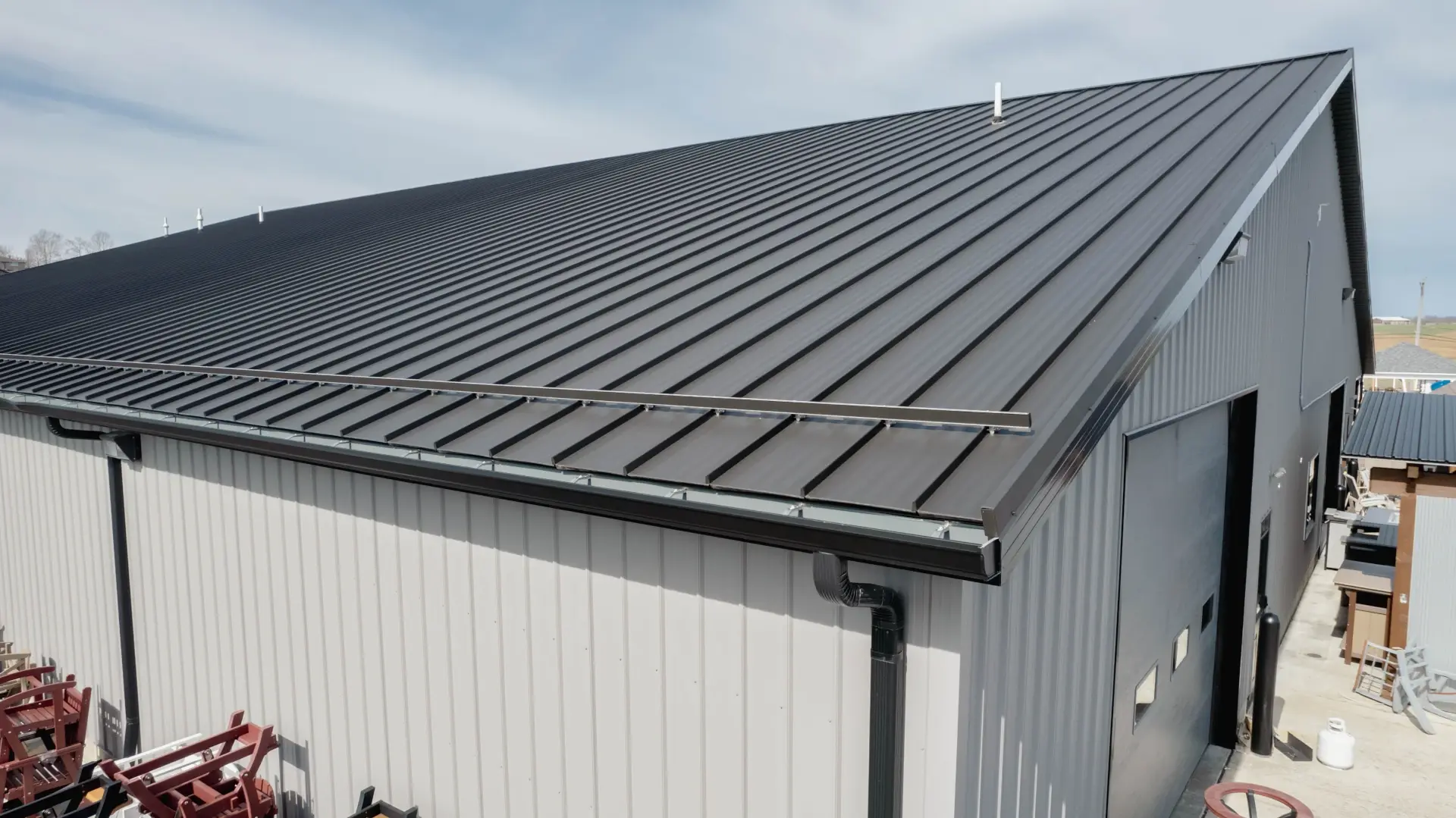
Ohio winters bring a little bit of everything: lake-effect snow, freezing rain, high winds, sudden temperature swings, and long stretches of bitter cold. These conditions challenge any exterior system, but roofing takes the brunt of it first. Metal roofing is a popular choice in central and northeast Ohio because it performs reliably in snow, ice, and wind when installed correctly.
Here is a closer look at how metal roofing holds up in harsh winter conditions, plus a few important winter do nots that protect your roof, gutters, and finish.
Snow accumulation is one of the biggest winter concerns for Ohio homeowners, especially during seasons when snow lingers on rooftops for weeks. Metal roofing is engineered to shed snow efficiently thanks to its smooth surface and low-friction finish. That reduces prolonged weight on the roof and helps limit the conditions that contribute to ice dam formation along the eaves.
Standing seam systems are often chosen for winter performance because of how the panels lock together and handle movement. Learn more here: Standing Seam Metal Roofing
Freeze-thaw cycles are common in Ohio. Temperatures rise, snow melts, then temperatures drop and refreezing starts. Over time, those cycles can crack or degrade roofing materials that absorb moisture.
Metal roofing does not absorb water, which helps it stay stable through repeated temperature swings. Modern coatings also help resist corrosion, so moisture and ice are less likely to cause long-term damage compared to many traditional materials.
Ice dams can still happen if insulation, ventilation, and drainage are not working together. This guide explains why they form and how snow management plays a role: How Snow Guards Help Prevent Ice Dams on Roofs
Ohio winter storms often bring gusty winds along with blowing snow. Metal roofing systems can offer excellent wind resistance because panels interlock and are designed to resist uplift when installed correctly.
Wind performance still depends on details like underlayment, trim, flashing, and proper fastening. Installation quality is a big part of why one roof holds up for decades and another develops winter problems early.
Metal roofs shed snow efficiently. That helps with roof load, but it can also mean snow releases in larger sections.
Snow guards help control snow release so it melts and moves off the roof in a safer, more predictable way. They are especially important above entries, walkways, patios, and driveways. Learn more here: Metal Roof Snow Guards
Gutters also matter in winter because snowmelt needs a clear path away from the roof edge and foundation. Proper sizing and secure installation help reduce overflow and ice buildup at the eaves. Here is our gutter service page: Gutters and Leaf Guards
Metal roofing is durable, but winter is not the season for DIY experiments. These are common mistakes that can cause damage, void warranties, or create safety risks.
Do not chip ice off a metal roof.
Scrapers, shovels, and sharp tools can damage the roof finish and expose metal edges. That increases the chance of corrosion later.
Do not use salt or harsh de-icers on the roof.
Many chemical de-icers can damage coatings, stain surfaces, or accelerate corrosion. If ice is a recurring issue, it usually points to ventilation, insulation, drainage, or snow management problems that need a real fix.
Do not climb onto an icy metal roof.
Metal roofs can be extremely slippery in winter. Falls are a major risk. If snow or ice needs attention, it is safer to call a professional with the proper equipment.
Do not pull down icicles by hand.
Icicles can be heavy and they often indicate an ice dam or drainage issue. Pulling them down can damage gutters, fascia, and drip edges.
Do not ignore sudden snow slides.
If snow is sliding off in large sheets near entrances or driveways, snow guards are usually the right solution. They help hold snow in place so it melts gradually instead of releasing all at once.
Do not assume a small leak will stay small.
Winter leaks can spread quickly as meltwater refreezes and reroutes. A quick inspection can prevent bigger repairs later.
If you want to see what professionals look for during cold months, this is a helpful reference: Cold-Weather Metal Roof Inspections
Metal roofing offers dependable winter performance thanks to efficient snow shedding, strong resistance to freeze-thaw wear, and excellent storm durability when installed correctly. Snow guards and a properly designed gutter system help complete the package by improving safety and controlling meltwater.
If you want help planning a winter upgrade or scheduling an inspection in Columbus or the rest of Ohio, contact Walnut Creek Metals and we will help you choose the right setup for your property.