


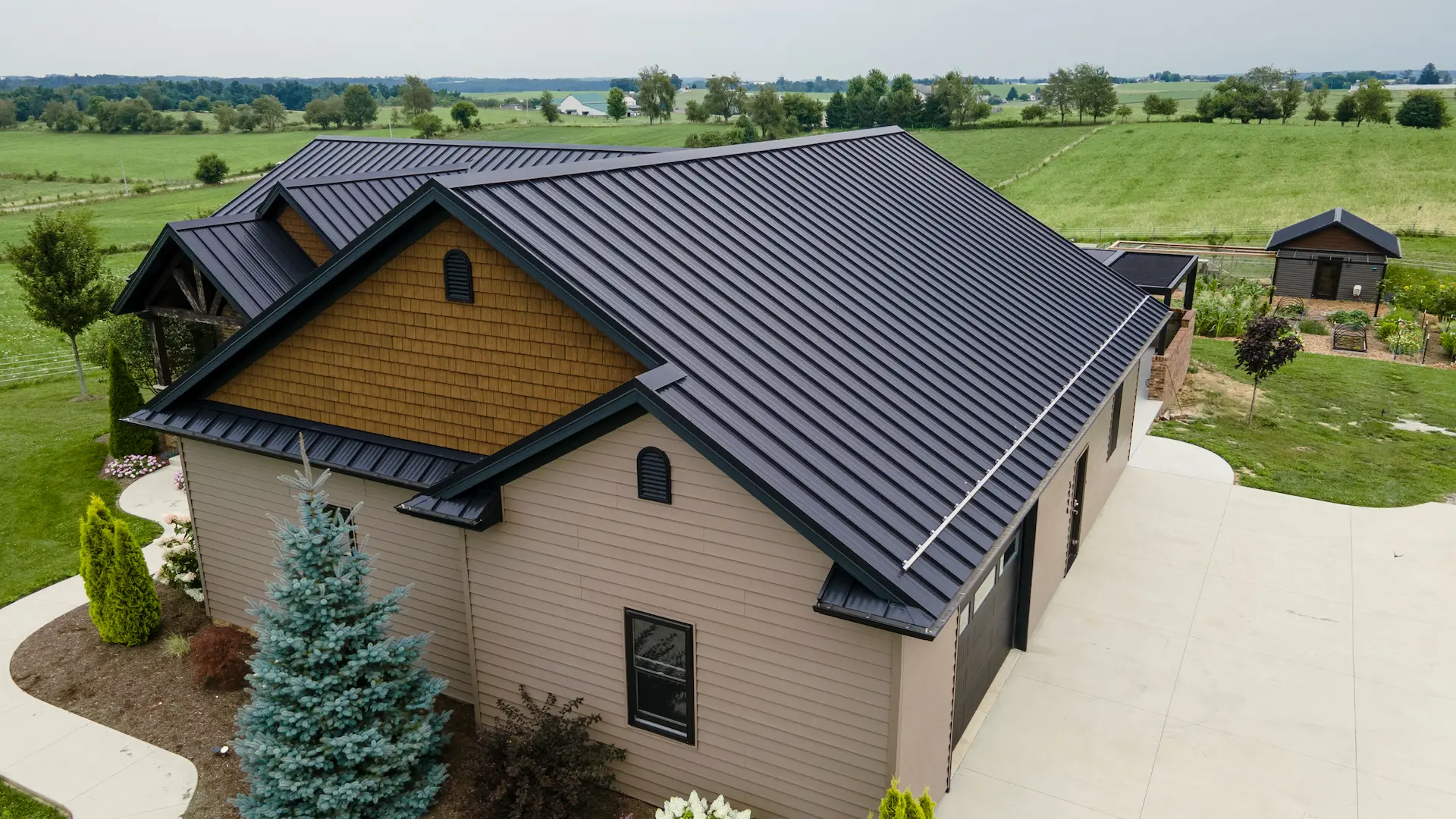
As leaves begin to fall and temperatures drop across Ohio, homeowners have a short window to prepare their homes for winter. While checking the furnace and sealing windows may be high on the seasonal to-do list, your gutters deserve attention too, especially if you have a metal roof.
Metal roofing sheds water, snow, and ice efficiently. That performance makes a properly functioning gutter system especially important. Clogged, damaged, or undersized gutters may struggle to manage runoff, potentially sending water where you don't want it.
A little preparation this fall can help your gutters perform better through rain, snow, freezing temperatures, and the spring thaw.
Your roof and gutters aren't separate systems. They work together to manage water around your home.
The smooth surface of metal roofing allows rainwater to move off the roof quickly. Gutters need to be positioned and sized appropriately to collect that runoff and direct it into downspouts.
If gutters are clogged or damaged, water may overflow instead of draining safely away from the house.
Once water reaches the gutters, it still needs somewhere to go. Downspouts should carry it away from the foundation rather than allowing it to collect near the home.
Good drainage can help protect landscaping, siding, fascia, foundations, and other areas that may be affected by uncontrolled water.
Leaves are one of the biggest seasonal challenges for gutter systems.
Even a small amount of debris can restrict water flow. As more leaves accumulate, gutters can become completely blocked.
Fall gutter cleaning should include removing debris from both the gutters and downspouts. Don't assume a downspout is clear just because the top of the gutter looks clean.
For safety, homeowners should avoid climbing onto a metal roof to complete this work. If gutters cannot be accessed safely from the ground or an appropriate ladder, consider calling a professional.
Homes surrounded by mature trees may need gutter attention more than once during the fall. Cleaning too early can leave your gutters full again before winter arrives.
If possible, schedule the final cleaning after most surrounding trees have dropped their leaves.
Cleaning provides a good opportunity to look at the condition of the entire system.
Gutters should remain securely attached and properly pitched so water moves toward the downspouts. Sagging sections can allow water to collect instead.
Check for loose connections, visible gaps, and areas that appear to pull away from the roofline.
Seams, corners, and connections can develop leaks over time. Watch your gutters during rainfall if possible. Water dripping or pouring from areas other than the downspout may indicate that repairs are needed.
Sometimes cleaning isn't enough. Older systems may no longer be the right fit for the home, particularly after a roofing replacement or other exterior improvements.
Fall can be a good time to consider gutter upgrades before snow and freezing temperatures arrive.
If your gutters routinely overflow during heavy rainfall even when they're clean, the system may not be handling water effectively.
A professional can evaluate the roof, gutter size, downspout placement, and drainage to determine whether improvements would help manage runoff more effectively.
Larger or better-performing gutters won't solve drainage problems if the downspouts aren't doing their job.
Downspouts need to move water efficiently and discharge it far enough from the home. Extensions or other drainage improvements may be appropriate if water regularly collects near the foundation.
For homes surrounded by trees, repeatedly cleaning gutters can become a frustrating part of fall maintenance.
Leaf guards are designed to reduce the amount of leaves and larger debris entering the gutter while still allowing water to flow through the system.
Quality gutters and leaf guards for metal roofs can make ongoing maintenance easier and reduce the likelihood of large clogs forming during peak leaf season.
Leaf guards don't necessarily eliminate every maintenance need. Gutters should still be periodically inspected to make sure everything is functioning correctly.
However, they can significantly reduce the amount of debris that enters the system.
Fall gutter preparation isn't only about rain. It's also about getting ready for what comes next.
Ohio winters can bring snow, ice, freezing rain, and frequent freeze-thaw cycles. Existing drainage problems can become more noticeable once temperatures fall below freezing.
Standing water in a clogged or improperly pitched gutter can freeze. Added ice puts unnecessary weight on the system and may contribute to damage.
Taking care of drainage issues during fall is much easier than trying to address them in the middle of winter.
Homes with metal roofs may also use snow guards to help control how accumulated snow releases from the roof.
Gutters, downspouts, leaf guards, and snow guards each serve different purposes, but together they can help create a roofing system that's better prepared for Ohio winters.
Homeowners can spot many obvious gutter problems from the ground, but some issues require a closer look.
If you notice recurring overflow, sagging gutters, loose components, poor drainage, or water collecting around the foundation, consider having the system professionally evaluated.
A professional can determine whether you need a simple repair or whether gutter upgrades would provide a better long-term solution.
Your gutters may not be the most noticeable feature of your home, but they play an important role in protecting it.
Before winter arrives, clean out fall debris, inspect your gutters and downspouts, and address areas that aren't draining correctly. If constant clogs have become a problem, leaf guards may also be worth considering.
Walnut Creek Metals provides metal roofing, gutters, leaf guards, and snow guards designed to work together to protect Ohio homes throughout the year. If your gutter system needs attention before winter, our team can evaluate your current setup and recommend a solution built around your home and roofing system.